May 26, 2008
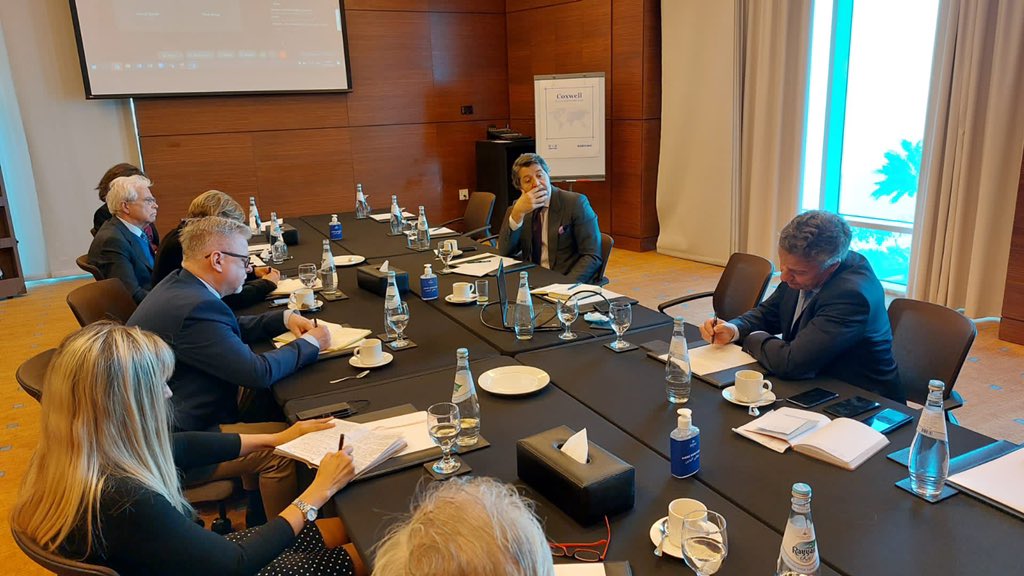
The International Institute for Strategic Studies (IISS) in cooperation with the Institute for National Strategic Studies, National Defense University (INSS-NDU) and the Rockefeller Foundation hosted a conference titled “New approaches to international security: reassessing the U.S. role in the world”. The conference was held in the Bellagio, Italy from April 28 till May 2.
The workshop focused on the future course of America’s role in international security, particularly on the way the next administration could remain constructively engaged, build wider coalitions, and contribute to the establishment of important institutions. The participants included 25 leading influential opinion-makers, policy-makers, and analysts from Europe, Asia, the Middle East, Africa, Russia and the Americas.
(To see the full program and list of participants, please click here)
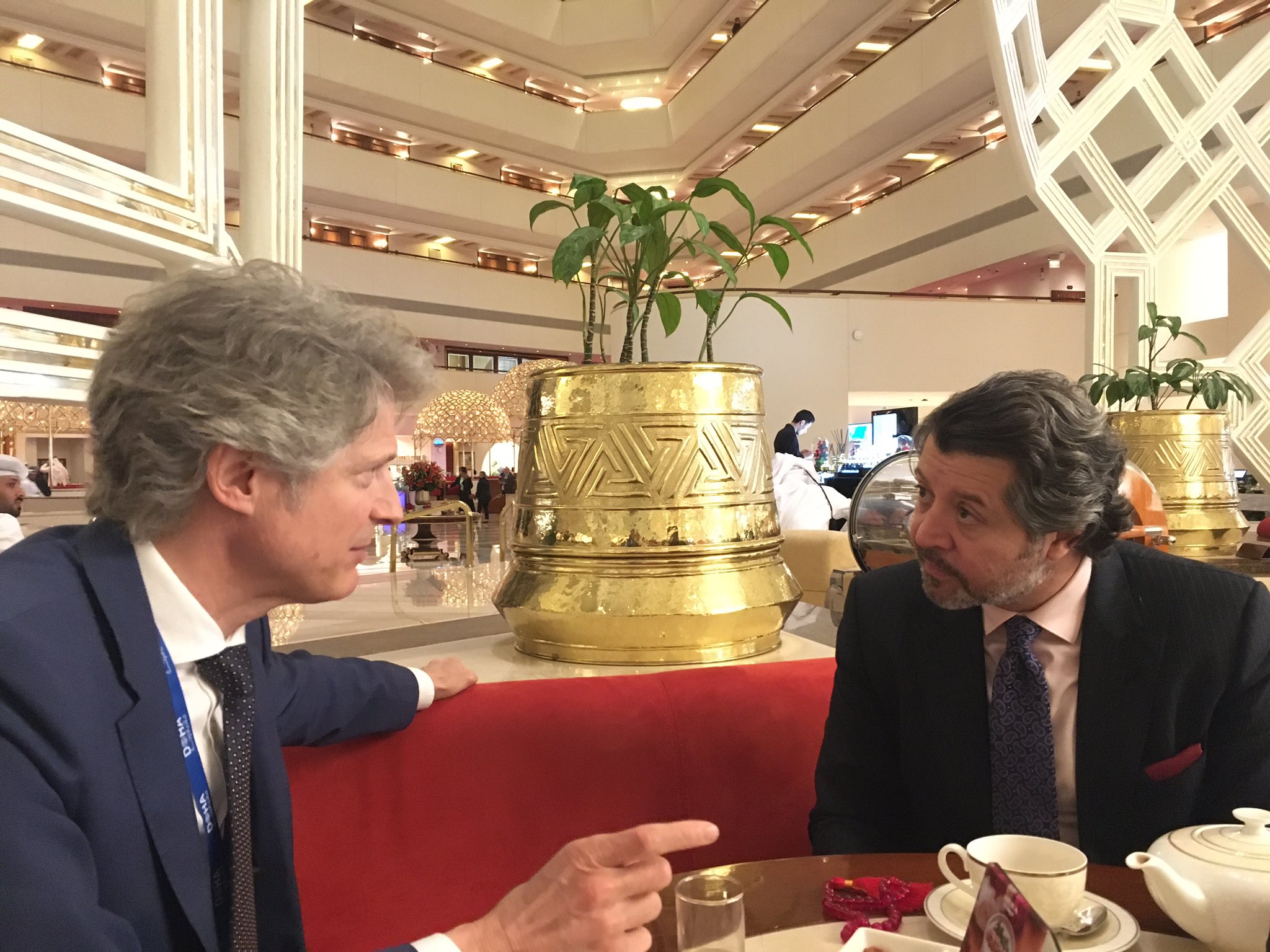
The director of CAPS Hekmat Karzai participated in the workshop and was a panelist in a session titled, ‘Stabilizing Post-Conflict States’ where he highlighted the US role in stabilizing Afghanistan.The following is summary of Mr. Karzai’s remarks:
If one assesses the role of the United States in stabilizing post conflict states, it can be categories in three different phases: 1:
The post-World War II occupation of Germany and Japan were America’s first experiences in the field. Both efforts were comprehensive and aimed at engineering major social change. The successes of these endeavours demonstrate that democracy was transferable even to a non-western country like Japan. For both the occupations, the US deserves credit for the reconstruction efforts and its abilities to deal with the challenges.
The German and Japanese occupations set the standards for post conflict transformation that have not been repeated since then.
2: Throughout the Cold War, the US did not really focus on democratization or transformation but rather tried to maintain a balance with the Soviet Union. Policies of containment –articulated by George Keenan– and deterrence were in place. Fundamental change in a society was not the objective but to help install a friendly regime in place of an un-friendly one.
Many of the initiatives were rather short lived. (Dominican Republic, Lebanon, and Panama or these efforts were undertaken in the middle of ongoing conflicts such as Vietnam and Korea.
3: After the Cold War, the US did not really concern itself with the status quo. The US started to use its power to solve conflicts rather than managing or containing them. Transformations of societies also become important and for many of its efforts, the US had broad support.
It should also be noted that after the Cold War, it become possible to secure international mandates, assemble broad coalitions and employ armed forces.
The scope of post cold war operations also expanded; it included building new military, police, judicial establishments, holding elections and rebuilding economies, in addition to monitoring ceasefires.
And if we look at the last decade, the United States has liberated seven societies and subsequently tried to develop them. In 1991, the US went into Kuwait to liberate it from the potential grips of Saddam Hussain; in 1992 US troops went into Somalia and then left it; in 1994 into Haiti; in 1995 into Bosnia to defend the Muslims; in 1999 into Kosovo and in 2001 into Afghanistan. The ironic part is that expect Haiti, all other countries were countries with Muslim majorities.
By 2003, when the US embarked on Iraq, there wasn’t any other army in the world with more experience operating in the Muslim World.
During the Clinton Administration, Americans improved their capabilities and were much organized; starting low at Somalia and then stopping ethnic cleaning in Kosovo. The same officials had organized four successive operations and clearly they were getting better at it.
Afghanistan as a state has been in a constant state of conflict for the last three decades.
The conflict started with the Soviet Invasion, which lasted a decade and left the country devastated. 85% of primary and secondary infrastructure was destroyed. The Soviet invasion was followed by a brutal civil war, which turned the major cities into rubble. In 1994, however, the brutal regime of the Taliban emerged; Al Qaeda further established itself and made Afghanistan the hub of international terrorism. At times, many forget that the 1998 East Africa bombings, the attack on USS Cole in Yemen in 2000 and 911 were all planned and financed from Afghanistan.
When the Operation Enduring Freedom started on November 7th 2007, Afghans were extremely optimistic. President Bush in his various speeches promised the Afghan people a ‘Marshal Plan’. Unfortunately, that plan never materialized.
Instead, Afghanistan received the lowest aid per capita since World War II.
The United States and its allies have put 25 times more money and 50 times more troops, on per capita basis, into post conflict Kosovo than into conflict stricken Afghanistan.
The International Security Assistance Force (ISAF) of 4,000 troops was given the mandate to safeguard Kabul, while security of other provinces was left to local commanders who established their own fiefdoms. Clearly the light footprint was not what the Afghans expected.
In addition, the operations within Afghanistan, to a large extent, were handled by the Department of Defence, putting the State Department out of the loop.
Even with little investment, there was grand success at the outset. An enlightened constitution was ratified; Presidential and parliamentary elections were held with enormous numbers; and today around six million children are going back to school.
Today, however, Afghanistan also faces three major challenges of security, governance and narcotics.
In conclusion, the US government and the military must take ‘post conflict’ mission seriously. Winning military battles are easy but not enough importance is given to what happens afterwards. The United States must develop capacity at an institutional level to deal with the challenge of stabilizing post-conflict states.
In Afghanistan, the United States must adopt a comprehensive strategy and move away from focusing on the immediate and short-term solutions. Only then, it will gain a momentum for success.




Leave A Comment